|
|
(1) The Bernard Lewis Project.
Professor Bernard Lewis (photo below) is an octogenarian expert of the “Middle East” (itself an invented geopolitical term). Lewis is indeed a “master” scholar and expert on the Turks, Iranian and Arabs (see sample of his books in references). And herein lays the tragedy: Lewis wields his treasure trove of knowledge as an engine of destruction. Few have ever heard of “The Bernard Lewis Project”. Lewis
Professor Lewis first unveiled his project in the Bilderberg Meeting in Baden, Austria, on April 27-29, 1979[i] [ii] (see the only photo available of a Bilderberg Conference – 1954 photo). He formally proposed the fragmentation and balkanization of Iran along regional, ethnic and linguistic lines especially among the Arabs of Khuzestan (the Al-Ahwaz project), the Baluchis (the Pakhtunistan project), the Kurds (the Greater Kurdistan project) and the Azerbaijanis (the Greater Azerbaijan Project)[iii].
Bilderberg
Dreyfus and LeMarc (see References, p. 157) provide a very succinct summary of the plan’s methodology: “According to Lewis, the British should encourage rebellions for national autonomy by the minorities such as the Lebanese Druze, Baluchis, Azerbaiajni Turks, Syrian Alawites, the Copts of Ethiopia, Sudanese mystical sects, Arabian tribes…the goal is the break-up of the Middle East into a mosaic of competing ministates and the weakening of the sovereignty of existing republics and kingdoms…spark a series of breakaway movements by Iran’s Kurds, Azeris, baluchis, and Arabs…these independence movements, in turn would represent dire threats to Turkey, Iraq, Pakistan and other neighbouring states.” The report is almost too incredible to believe: this is indeed the dark side of Professor Lewis’ distinguished academic career. For the students of geopolitical and Petroleum Diplomacy however, there is nothing new regarding the “chop-up Iran” agenda (item 10). Robert Olson (see References, esp. p.108-158) has provided a surprisingly candid and sober assessment of the Greater Azerbaijan Project. He has provided a detailed assessment of how the intelligence and military agencies of Turkey, USA and Israel have set up bases and networks in Northern Iraq, Eastern Turkey and the Republic of Azerbaijan (esp. Nakhchivan) to broadcast anti-Iran hate propaganda into Iranian Azerbaijan. There is in fact a foreign-funded anti-Iran separatist radio station known as the Voice of Southern Azerbaijan (VOSA). The relationship between VOSA and the Rashet Bet radio station (see photo below) of Israel was first reported by independent reporter Nick Grace. The report is available on the Clandestine Radio Intel Website (see Web references). Excerpts from his report are as follows:
“…According to monitor Nikolai Pashkevich in Russia, "when I tuned in my receiver to this channel I found an open carrier with 'Reshet Bet... on the background and then VOSA signing on" (CDX 180). Rashet Bet is, of course, a news service of Israel Radio. The German Telecommunications department has also pinpointed VOSA's location to be somewhere around Israel, Jordan and Saudi Arabia (BCDX 351.)…VOSA is clearly supervised and arranged by Israel's intelligence agency: the Mossad…”. RashetBet
Olson also reports of sophisticated telecommunications equipment mounted on specialized vehicles that regularly drive inside Iranian territory, beam propaganda (presumably on video and radio) and retire across the border once their programs are concluded. Below left is a photograph of the latest military spy communications truck, the SmarTruck II - note state of the art communications panels inside the vehicle (below right photo):
Trucks
The main role of VOSA-Rashet Bet and the SmarTruck II vehicles are to target Iranian Azerbaijanis with false and provocative information, mainly as narrated by Mr. Chehreganli and Dr. Brenda Shaffer (see item 4). Olson has also reported of a plan to station western (American) heavy military equipment (e.g. tanks, missiles) in the Republic of Azerbaijan. The Moscow News report on September 26, 2005, has also reported of such assistance taking place (Web References). CIA operative, Reuel Marc Gerecht’s book, “Know Thine Enemy” (see Edward Shirley in References) neatly encapsulates current geopolitical objectives in Iranian Azerbaijan and Iran as a whole. Note the following review by Jason Athanasiadis in the Asia Times (Apr 29, 2005): Gerecht …mulls
over … cultivating high-ranking Azeris to inciting separatist Kurds
… Political reporter, Michel Chossudovsky, has provided the following assessment: “Washington has been involved in covert intelligence operations inside Iran. American and British intelligence and Special Forces (working with their Israeli counterparts) are involved in this operation… Targeting Iran … broadly serves the interests of the Anglo-American oil conglomerates, the Wall Street financial establishment and the military-industrial complex…The announcement to target Iran should come as no surprise. It is part of the battle for oil…In Baku, Azerbaijan Rumsfeld was busy discussing …the stated short term objective …to "neutralize Iran". The longer term objective under the Pentagon's "Caspian Plan" is to exert military and economic control over the entire Caspian Sea basin, with a view to ensuring US authority over oil reserves and pipeline corridors.” [Michel Chossudovsky, Planned US-Israeli Attack on Iran, in Global Research Publications On-line, May 1, 2005, See Web References]Rumsfeld’s goal to “neutralize Iran” is actually a description of Olson’s prediction of the intended “Right-sizing of Iran” (p.236) – destroying Iran as a sovereign state and erasing its Persian heritage. In practice, this means that Western and democratic states have allied themselves with dangerously racist organizations (e.g. SANAM, Grey Wolves, etc.) in the endeavour to dismember a sovereign state. Very little thought seems to have been put into the consequences of such irresponsible actions. Grey Wolf ideologues falsely and naively believe that the present anti-Iranian geopolitical situation will allow them to finally realize their fantastic dream of their pan-Turanian super state, stretching from China to the Balkans, encompassing Central Asia, the Caucasus, Russia, Ukraine and Persia in its wake. Western patronage of Grey Wolf ideologues (e.g. Mr. Chehreganli) is ultimately futile and doomed to failure (recall Part V). These actions will cost western taxpayers billions of wasted Dollars, Pounds and Euros. Imagine if that same money were to go to the promotion of education, friendship societies, health care and even support for the victims of the recent Hurricane Katrina Disaster in New Orleans. The fact however is brutally and cynically clear: geopolitical agendas and petroleum diplomats has always ranked the economic (petroleum) equation higher than the human one. The partitioning of Iran (Bernard Lewis Project) is seen as an economic necessity (see item 3 below). But herein lies the irony: the Bernard Lewis plan is also directed against Turkey (see item 9 below) and Arab states such as Iraq. It is interesting that some media reports are now suggesting that the only vialble solution to the western Iraqi entanglement is to partition that state along ethnic/sectarian lines. This would mean that Iraq would be split into three separate Shiite, Sunni and Kurdish mini-states:
Iraq3Parts
The formation of a Greater Kurdistan for example, may potentially lead to the disintegration of not only Iran, but Turkey, Iraq and Syria[iv]. The formation of a Greater Azerbaijan would eliminate a significant portion of Iran’s industrial base, geography, and demography.[v] This would in turn encourage a pan-Kurdish separatist movement encompassing Iran, Turkey and Syria, leading to the break-up or diminution of those states. As noted by Engdahl (p.171), the Bernard Lewis Plan endeavours to: “…promote the Balkanization of the entire Muslim Near East along Tribal and religious lines. Lewis argued that the West should encourage autonomous groups such as the Kurds…Ethiopian Copts… Azerbaijanis…the chaos would spread in…an “Arc of Crisis”… ”. There are indications that the Iran-Iraq war may have been part of the larger Bernard Lewis plan. Iran was to be invaded with the specific purpose of carving it up into small mini-states. Direct evidence of the British origins of the Iraqi invasion plan was reported in The New York Times newspaper early in the war (See article entitled "British in 1950, Helped Map Iraqi Invasion of Iran" by Halloran, R. in The New York Times, Thursday, Oct.16, 1980.). Interestingly, this report was ignored by the mainstream press and media. The points of this report are summarized as follows: (1) A detailed invasion plan had been prepared for the
Iraqi armed forces in 1950 by the British Military advisors for Iraq,
a full 30 years before the invasion of Iran by Saddam Hussein. The British plan for Iran's invasion indicates that even before the Bernard Lewis Plan was unveiled in the Bilderberg Conference, detailed British plans for eliminating Iran as a state have bene in place long before 1979. (2) Geopolitics & Petroleum Diplomacy. (a) The Role of British Petroleum and Oil Companies Although not generally known, Imperial Britain has had a keen interest in the Baku oilfields since the beginning of the twentieth century. This is dramatically illustrated from the May 23, 1914, London Petroleum Review, which reports the Ottoman oils fields of Mesopotamia (modern Iraq and Kuwait) as “a second Baku in the making” (note the report blow – the “Baku” caption is highlighted for reference – see also William Engdahl (p.40-41) in References):
ReportB
It was in the 1860s when Russian geologists discovered substantial petroleum deposits along the Western Caspian, mainly in the former Persian territory of Baku. The British certainly had eyes for those Baku deposits, but these were under Russian occupation at the time (recall the Golestan and Turkemenchai treaties cited before). This is why they had such a keen interest in the “second Baku” of Mesopotamia. The First World War allowed Imperial Britain to move into Mesopotamia and the Persian Gulf as to appropriate the region’s oil deposits for itself. The major weapon used by British intelligence to dissolve the Ottoman Empire was its ethnic diversity, expressed mainly by different languages (e.g. Kurdish, Arabic) and religions (Christian, Muslim, Alevi, etc.). Petroleum diplomacy has had a long tradition of mobilizing ethnic strife to achieve its geopolitical and economic objectives. This is based on the proven Roman dictum: Divide and Rule. The collapse of the former Soviet Union finally allowed for the opening of the Caspian oil market bonanza to western interests. The legendary poise and patience of British Petroleum (BP) diplomacy has again paid off. The present chief executive officer of British Petroleum is Edmund John Philip Browne (Baron Browne of Madingley) (left Photo below). He was a party to the nearly three and a half years of negotiations with Heidar Aliev (the late President of the Republic of Azerbaijan) to develop Azerbaijani oil deposits. On September 20th, 1994, Aliev signed a production sharing contract with a whole host of western and Turkish oil companies in Baku's Gulistan Palace (below right photo – Browne 2nd from left in front row, Aliev - in front centre -stands next to him).
LordBrowne The presence of BP in this project is significant. Other members of note on September 20th, 1994, were John Imle (Unocal – recall its disastrous role in Afghanistan), Stanislav Pugach, (Russian Ministry of Fuel and Energy), Tom Hamilton (Pennzoil) and Sitki Sancar (Turkish Petroleum). At present, the Anglo-American petroleum access to the oil and gas deposits of the Caspian basin is extracted via the Baku-Tbilisi-Ceyhan pipeline. This pipeline meanders through Eastern Turkey, around Armenia, through Georgia and finally through to the Republic of Azerbaijan. The security concerns with the pipeline however are high, making the project economically costly. Georgia is unstable, and has struggled to maintain its Ossetian and Abkhazian minorities within its borders. Eastern Turkey, teeming with Kurds, is vulnerable to attacks by separatists there. This explains why the pipeline has virtually skirted around the Kurdish region – proof again of the project’s costly and inefficient basis. The intense political manoeuvring between Turkey, Iran, Russia, the Anglo-American political and economic elites, and the EU in the Caspian region has been characterized by some as “The New Great Game” – perhaps this is true. The end result for Iran has been unsuccessful in that she has been barred from any economic participation in the pipeline (mainly as result of Anglo-US foreign policy)[vi]. Iran is a stable and politically unified state, which (unlike Turkey) minimizes the need to maintain large military forces in potentially hostile regions (e.g. eastern Turkey’s Kurdish region) in order to safeguard pipelines. It is far more economical to transport Caspian oil via Iran’s efficient transportation system which links the northern Caucasian regions to the Persian Gulf, where modern and efficient ports are fully operational. Allowing Iran to participate in the Caspian project however is geopolitically inconsistent with the Bernard Lewis plan, unveiled in the Bilderberg Conference of 1979 (item 1). (b) Dismantling Geopolitical Obstacles: Dismembering Yugoslavia William Engdahl (see References) has provided a detailed analysis of Petroleum geopolitics and its ambitions in the Caucasus. Engdahl also argues that the civil war and partitioning of Yugoslavia is part of the larger scheme to secure the Caspian pipeline into Europe “…The Yugoslav model had to be dismantled…Yugoslavia also lay on a critical path to the potential oil riches of Central Asia …the National Endowment for Democracy…began…handing out generous doses of dollars in every corner of Yugoslavia, financing opposition groups…journalists…trade union opposition…and human rights NGOs…(p.240)…using groups such as the Soros Foundation…financial support was channeled into often extreme nationalist or former fascist organizations that would guarantee dismemberment of Yugoslavia (p.241)…” [William, Engdahl, A Century of War: Anglo-American Oil Politics and the New World Order. London: Pluto Press, p.240-241, 2004] Sean Gervasi’s little known article entitled “Germany, U.S. and the Yugoslav Crisis” (see References) reported that Yugoslavia was “…the target of a covert policy waged by the west and its allies, primarily Germany, the United States, Britain, Turkey and Saudi Arabia…to divide Yugoslavia into its ethnic components…a process of national fragmentation and fratricidal war…Germany…demanded that the Bush administration adopt the German policy of working for the “dissociation”, that is, the dismantling, of Yugoslavia.” [Sean Gervasi, Germany, U.S., and the Yugoslav Crisis: The civil war as lethal shadow play, Covert Action Quarterly, Volume 43, p.41,43] Why? Because, a strong, large and united state in the Balkans (Yugoslavia) was viewed as a potential obstacle to the coming oil pipelines of the Caspian Sea, just as Iran is today. One the fringe fascist organizations that were promoted and supported by the west was the vehemently far-right and anti-Serbian “Croatian Rights Party” In Yugoslavia (see photo below by Gervasi – see References).
Croat Nazi
The parallels with today’s Iran are striking. The west is currently supporting “extreme nationalist” and “fascist organizations” such as the Grey Wolves and Mr. Chehreganli’s SANAM organization Engdahl cites two additional reasons for western sponsorship of Yugoslavia’s partitioning: [a] she was a highly successful multiethnic state which had blended elements of both socialism and capitalism into its economy. The present mini-state successors of Yugoslavia are shadows of their former economic selves. Poverty and economic instability are the legacies of the Yugoslav tragedy (see child-beggar in Prishtiwie, Kosovo – photo by Gervasi – see References].
Bosnia
Mr. Chehreganli has promised Iranian Azerbaijanis that if they separate from their ancestral nation, they will be rewarded with a booming western style economy, which he proudly dubs as “The Kuwait of the Caspian”. The reality is far different. The photo of the dejected Bosnian child aptly summarizes what awaits the peoples of the region should Mr. Chehreganli succeed in igniting a fratricidal war in Iran and the Caucasus. [b] the need to have “…a commanding and clearly permanent military presence in the strategic Balkans within reach of the Caspian Sea” [Engdahl, 2004, p.244] The Caspian Sea? The objectives of the Azerbaijan project (e.g. SANAM, UAM) of the Bernard Lewis Plan are designed to promote western (mainly Anglo-American) geopolitical and Petroleum interests. Mr. Chereganli’s SANAM movement openly acknowledges the role of western and Turkish support (in the name of “Human Rights”) for their cause: “…Since 2002 the foreign representations of SANAM has been opening. At present, 24 representations -Bureau of the United States of America, Europe, Turkey and also the Azerbaijani Republic have been functioning…is known by the European Union, European Parliament, …UNO …” [See SANAM website – click on “About SANAM” link in English – refer to Web References] Two specific objectives will be achieved by the “re-unification” of “north” and “south” Azerbaijan: [a] A potentially powerful Iranian state is removed from the international arena. The logic is that with Iran dismembered, the profit margin would increase as there would no longer be any need to economically and politically accommodate a large and potentially powerful state. Many western geopolitical interests are determined to gain access to the Iranian portion of the Caspian by either dismantling or reducing the present state of Iran. Such a multi-ethnically unified state (like former Yugoslavia in the Balkans) would set limitations on foreign business operations on its sovereign territory. The destruction of a large and powerful state leads to smaller states which are more easily bought under the political and economic control of the aforementioned geopolitical interests. [b] The Petroleum consortiums will have much easier geographical access to the Caspian region, making the process of Petroleum transportation far less costly than the present Baku-Tbilisi-Ceyhan pipeline. With Iranian Azerbaijan, Kurdistan and Khuzestan detached from western Iran, the “Iranian oil market”, especially in Khuzestan will be opened to multinational interests. The key question to be asked is this: is the state of Iran a geopolitical obstacle to Petroleum Diplomacy? As noted by Engdahl: “The overall emphasis is on removing obstacles – whether political, economic, legal and logistical – to the increased procurement of foreign oil…” [William, Engdahl, A Century of War: Anglo-American Oil Politics and the New World Order. London: Pluto Press, p.264, 2004]. Olson’s study of Turkish-Iranian relations notes how Iran is itself an obstacle to geopolitical lobbies and Petroleum diplomacy: “Iran was still an obstacle to the new combinazione (Pax Israel-Pax Americana), and its government and/or state would have to be changed, removed or dimished” [Olson, Robert, Turkey-Iran Relations, 1979-2004: Revolution, Ideology, War, Coups and Geopolitics, 2004, p.236]. Olson also notes how the use of Azerbaijani separatism simultaneously accommodates geopolitical objectives by removing Iran as a powerful state [a] and facilitate petroleum commerce [b]: “The re-emergence of the Azeri question also fit the international geostrategic objectives of the US, EU, Turkey and Israel. First it would lessen the baility of Iran to participate in the distribution network of oil and gas pipelines criss-crossing Central Asia, the Middle East and Southwest Asia. Second, the growth of Azeri nationalism facilitated US and EU efforts to make the Caspian Basin region a “second” Persian Gulf…to exclude Arab and many Muslim countries…from having any effective voice in international affairs…to more effectively determine the price and access to…the Persian Gulf and the Caspian Sea basin.” [Olson, Robert, Turkey-Iran Relations, 1979-2004: Revolution, Ideology, War, Coups and Geopolitics, 2004, p.155-156] If the Greater Khorassan and Baluchistan projects are revived (and there are indications that this is happening), then eastern Iran will be detached as well, allowing for pipelines to be laid from Central Asia to Iran’s southern waters. Engdahl has argued that the main reason that the Taliban of Afghanistan was supported by the West was due to hopes of laying a Central Asian pipeline across Afghan territory all the way to Pakistani ports. A popular argument in today’s media outlets is that much of today’s predicament is the result of more than two and half decades of political and ideological alienation between Iran and the United States. There is no question that this animosity must be lifted, and is a major contributor to present day politics. However the issue being discussed here is the largely unreported geopolitical and economic factor: Petroleum Diplomacy. (3) Is Oil Running Out? Cheap and plentiful Oil is rapidly becoming a diminishing resource. This fact has been hidden from global popular knowledge. All the facts about to be reported below are listed under Part VI References: Diminishing Petroleum Resources, just after the Web references. These are also reported by the aforementioned William Engdahl (see References, p.258-263, 284). Just two days before the horrors of Sept 11, 2001, a very interesting memo was delivered to Tony Blair’s Cabinet Office in London. The Memo was called “Submission to the Cabinet Office on Energy Policy”. Virtually unknown is the fact that the panel which submitted the report to the British Prime Minister’s office included the aforementioned British Petroleum chairman, Lord Browne. A number of details from that report and other subsequent communiqués can be summarized into the following: [a] Global supplies of cheap oil are diminishing – output will soon decline. The global peak for oil was forecasted to be 5-10 years away and Natural Gas 20 years away. [b] One of the reasons for declining access to cheap oil will have to do with the rise of new economic global powers: China, India and possibly Indonesia. [c] At present, oil supplies are contributing 90% of the world’s transportation fuel as well as 40% of the world’s other vital energy necessities. [d] Large investments in available Middle Eastern supplies will only result in limited increases. “Available” means those regions under the full sway of western interests. [e] There is a significant amount of underdeveloped oil resources in the Middle East, notably Iran, Iraq, Saudi Arabia, Kuwait, and the oil Emirates of the Persian Gulf. Iraq alone has been estimated to have perhaps 432 billion barrels of oil reserves, making it an even larger resource than Saudi Arabia. Western Africa and Libya were also reported as having significant reserves. [f] The Caspian Sea region, especially in the Republic of Azerbaijan, is also seen as a lucrative resource base. The report was prepared collaboratively by the following: · United Kingdom Oil Depletion Analysis Centre (esp. world-renowned geologist, Dr. Colin J. Campbell · British petroleum · Colorado School of Mines · Princeton University’s Geology Department · The French Petroleum Institute · University of Uppsala (Sweden) · Petroconsultants (Switzerland) · Douglas-Westwood Ltd. Although news reports did appear in some of the world’s most highly respected media outlets (see Part VI References: Diminishing Petroleum Resources), none of these appear to have attracted much attention. Engdahl’s analysis of the main thrust of geopolitical and Petroleum Diplomacy are of interest: “…controlling every major existing and potential oil source and transport route on earth…deception would be essential…” [Engdahl, 2004, p.263-264] It is no co-incidence that geopolitical lobbies are also courting the overtly racist “Al-Ahwaz” Arab separatist organization in the endeavour to separate the oil-rich Khuzestan province in Iran’s southwest (see item 10). SANAM, The Grey Wolves, the UAM, Dr. Silahi Diker, Mr. Mahmudali Chehreganli, and some elements of western scholarship (see following item), western media outlets (item 7) are all expendable assets in the “deception” (i.e. the Bernard Lewis Project) to extend geopolitical and petroleum hegemony. (4) Manipulating Scholarship in the West: There are a number of lobbies actively promoting pan-Turanian ideology in the west. The majority of these constitute the Petroleum and geopolitical lobbies discussed earlier in items 1-3. An important lobby affiliated with these is the American Turkish Council (ATC- see Web References).
(a) The ATC.
It is no coincidence that the ATC is one of the most powerful lobbies in America today. As a "non-profit" organization, the ATC operates tax-free and is kept out of the media and legal spotlights. But perhaps the most interesting component is the "educational committee” of the ATC. This committee has successfully lobbied the US public and government branches on behalf of the ATC.
Political reporter Christopher Deliso has cited a distinguished array of American ATC members (see Web References). Their chair has been known to include Brent Scowcroft, an influential member of the US government. According to Deliso, the American membership is represented by an impressive array of military contractors such as Boeing, Bechtel International, BAE Systems, Lockheed Martin, General Electric, Northrop Grumman, Raytheon and United Technologies/Sikorsky.
Political writer, John Stanton, has conducted considerable research into the activities of the ATC and its attempts to influence western centers of higher learning (see References).
Popular opinion regularly speaks of a powerful Jewish lobby in the US government: virtually unknown is the role of the “Turkish lobby”. These include Senators John Breaux and John McCain, and many other people of considerable influence including Richard Perle, Douglas Feith (long time chair of the Defense Policy Board and Under Secretary of Defense for Policy), and Paul Wolfowitz (Deputy Defense Secretary). The Turkish lobby is now able to overpower the Greek and Armenian lobbies in the US government. This has allowed for the unhindered manipulation of historical scholarship in American universities. Reports of attempts at manipulating western scholarship began to surface in earnest by the mid-1990s. As reported in the Hellenic Nationalist Page “Turkey has intensified her attempts to spread her propaganda to internationally renowned universities around the world…in the Chronicle of Higher Education, Amy Magarao Rubin exposes the Turkish attempts at historic revisionism…fraud and influence of appointments is being mentioned…” [Hellenic nationalist Page - See Web References It has been ten years since that report was put forward to US government officials and universities. Not only has that report has been quietly shelved, but the very warnings of that report are now being realized. For the first time in civilized human history, politics is being allowed to influence academia. Put simply, major western (mainly English language) universities are accommodating and promoting pan-Turanian ideology. Note the following review by Kazakh Professor Doulatbek Khidirbekughli’s of Schoeberlein’s “Mysterious Eurasia” which was hosted by Harvard University’s Eurasian Studies Society (CESS): “Ten thousand years ago, ancestors of the Turkic tribes inhabited Central Eurasia. These Turkic Eurasian tribes migrated in all directions. During this great migration of peoples, they influenced the cultures of the European peoples, including Western Christianity, as well as the cultures of the …Chinese civilizations in the East…Some of these subsequently crossed the Bering Strait, forming the stock from which some Native American peoples descended. In Western Eurasia contact between Turkic and Germanic peoples came with the fall of the Roman Empire as the Huns settled in Europe.” [Doulatbek Khidirbekughli Mysterious Eurasia: Thoughts in Response to Dr. Schoeberlein, CESS, Volume 3, Number 1, Winter 2004 - See Web References] Recall the discussion in Part I, item 2, where we noted of Professor Silahi Diker’s claims of a 10,000 year civilizational legacy of the Turks as harbingers of world civilization (item 2a) and as the ancestors of the North American Indians (item 2g). Central to this argument is the fraudulent fallacy that “Turkic tribes inhabited Central Eurasia” (item 2l) as far back as 10,000 years ago. As noted in Part 1, item 2l, Turkic tribes arrived much later into Central Asia, with the earliest penetrations occurring in the 3rd century BC. The professor is retroactively Turcifying all earlier non-Turkic peoples of the steppes. As noted previously, pan-Turanian academics repeatedly confuse facts on the ground today with past history. Thanks to universities such as Harvard, a fringe racialist ideology formed in 1920s Turkey is now being given a prestigious academic platform to propagate and disseminate its false and divisive doctrines into mainstream western society. (b) CSIS. Virtually unnoticed is another powerful lobby known as the Centre for Strategic and International Studies (CSIS) (see http://www.csis.org/ in web references). The CSIS website shows the powerful interest of petroleum and geopolitical lobbies with respect to the Republic of Azerbaijan. A very revealing link is entitled “Caspian Sea Region” (see http://parstimes.com/Caspian.html in Web References). This link reveals at least 21 academic and governmental organizations involved with “Caspian Studies”. This is all a very recent development, and it is curious as to why so many academic outlets have virtually mushroomed – and what purpose these organizations serve. A quick study reveals famous names such as the University of Bremen, University of Indiana, University of Michigan, Berkeley, Virginia Tech University, Columbia and Harvard University. There is also a link to “Iran” on the top menu bar which shows surprising detail on that nation’s natural resources, especially on the Caspian Sea. (c) Dr. Brenda Shaffer. The leading western academic outlet providing support for pan-Turanian ambitions in Iranian Azerbaijan is the Caspian Studies Program at Harvard University (see http://bcsia.ksg.harvard.edu/?program=CSP in Web References). The Research Director of the Caspian Studies Project is Brenda Shaffer (see photo below): Brenda Shaffer
Dr. Brenda Shaffer is an American-born and Israeli-educated research director of Harvard University's Caspian Studies Program. Her program is mainly funded by major oil companies and the US-Azeri Chamber of Commerce, which itself enjoys extensive funding by various anti-Iran economic and political interests. Despite her apparent profile as an academic, Shaffer has become a highly active proponent for the destruction of the state of Iran, by way of her political advocacy for Azerbaijani separatism. This is reflected in her writings as well as regular appearances in the media outlets of the US[vii], Britain[viii], Europe, Turkey and the Republic of Azerbaijan. She regularly appears in separatist Azerbaijani gatherings as a guest speaker. Previous to her Harvard posting, Dr. Shaffer served in Israel as a policy analyst, intelligence agent and in the Israeli Defence Forces. Shaffer’s book, Borders and Brethren: Iran and the Challenge of Azerbaijani Identity (see References – see book jacket below) claims to have proven that no such thing as a unifying collective Iranian identity exists.
ShafferBK
Shaffer also claims to have “objective proof” that the bulk of Azerbaijanis wish to separate from Iran. Shaffer’s textbook has become a standard reference for Washington Analysts, who regularly defer to Dr. Shaffer’s apparent “expertise” in Caspian and Iranian affairs[ix] - she is in fact a prolific writer on the Caspian and Iran. The confidence of the distinguished gentlemen in Washington is rather misplaced, as Dr. Shaffer has relied on Soviet methods of historiography. The aforementioned Professor Atabaki (of Iranian Azerbaijani descent) has provided a book review of Dr. Shaffer’s text – and with his permission, some of his direct reports are reproduced below (along with my humble comments): 1) “Within the first two chapters, however, the reader becomes disappointed with the unbalanced and sometimes even biased political appraisal which not only dominates the author’s methodology but also shapes her selective amnesia in recalling historical data… shortcomings in Shaffer’s study are vivid, both in regard to methodology and the data she offers us…” Recall our discussions with respect to how the history of Babak Khorramdin, Sattar Khan, and the Safavids have been re-narrated by pan-Turanian ideologues. Professor Atabaki’s description of Dr. Shaffer’s “selective amnesia in recalling historical data” reminds us of the late Dr. Elchibey discussed earlier. Had Shaffer’s text appeared during the Soviet era, her writing style would be indistinguishable from contemporary Stalinist history books. This is because she skilfully omits information that contradicts her views. This is especially evident in Shaffer’s following statement: "Amir Ali Lakhrudi, chairman of the Democratic Party of Azerbaijan and a witness to the December 12 (Azer 21) takeover in Tabriz, stated that when Tehran retook the city, 30,000 people were killed and 300,000 deported and 10,000 immigrated to Soviet (north) Azerbaijan." As we noted in Part II (item 1e), there were no mass deportations, arrests or killings. Most importantly, there was no indigenous resistance to Tehran (item 1e). Dr. Shaffer’s methodology is indeed beset by selective amnesia. 2) “… Shaffer insists on mapping out the purely ethnic dimensions… one would expect arguments based on fieldwork among rural as well as urban Azerbaijanis in Iran as well as in the Republic of Azerbaijan. Unfortunately, her fieldwork is limited to interviews with some Iranian Azerbaijanis, elite individuals living in the Diaspora, often driven by strong political motivations. Obviously studying ethnic sentiments and identity in present- day Iran without conducting all-inclusive fieldwork inside Iran is inequitable... the author has not always observed academic accuracy in presenting data In short, Dr. Shaffer of Harvard University is engaging in biased data selection – any Doctoral candidate or Professor caught engaging in such practices (i.e. violation of academic accuracy) would be failed and expelled from any reputable university and their credentials would be permanently stripped. To put it bluntly, biased data selection is the statistical equivalent of lying. This is glaringly evident in the way Shaffer misrepresents the 1918 journal Azarbayjan, Joz'‑i la-yanfakk-i Iran (Azerbaijan, an Inseparable Part of Iran). Shaffer only refers to its title as “Azarbayjan”, and omits the rest of the title. Why? Because if she also included Joz'‑i la-yanfakk-i Iran (Azerbaijan, an Inseparable Part of Iran), this would contradict the message she is trying to get across: that the journal is an expression of an implied “separatist” identity. Once again, this is a prime example of “cut and paste” Stalinist scholarship. These practices are not only tolerated but apparently encouraged by Dr. Shaffer’s sponsors in the US government. This is tragic, as this is the case of the blind leading the blind. People like Brenda Shaffer will only widen the chasm of misunderstanding between the United States and the people of Iran. 3) “…she (Brenda Shaffer) asserts that “the [Islamic] revolution’s failure to bring significant democratization attracted some [Iranian] Azerbaijanis, who had previously identified themselves chiefly as Iranians, to ethnic-based messages” (p. 79) and notes that “anti-Iranian sentiments …run high in the Republic of Azerbaijan” (p. 164). In neither case does she offer documentary evidence supporting her argument.” This is similar to pan-Turanian scholarship. Arguments and “evidence” are always claimed (or invented), yet the only real “evidence” is the statement itself. Dr. Shaffer’s blanket statement that “anti-Iranian sentiments …run high in the Republic of Azerbaijan” is highly selective and is in fact untrue. Many highly educated academics in the Republic of Azerbaijan reject the Soviet-style historiography that Dr. Shaffer is reviving This has been aptly expressed by the late Professor Zia Boniyadov (former academic of the Oriental Studies Institute of Soviet Azerbaijan) during a visit to Tehran in early 1989[x]. Ziya
Professor Boniyadov noted that much of the historical claims of pan-Turanian ideology against Iranian Azerbaijan (i.e. “division” of “Greater Azerbaijan” by Iran and Russia) have their academic roots in the Stalinist era of the former Soviet Union[xi]. Boniyadov has noted that much of the claims for Iran’s destruction are “…Stalinist policies and expansionist…those who now pursue such policies in the name of ‘culture’…are simply the followers of Bagherov and Heidar Aliev and Stalin…”[xii]. It would seem that these statements were not to the liking of certain elements – the Professor was mysteriously murdered in his homeland in 1997. Viewpoints such as Boniyadov’s have been conveniently ignored by regional “experts” such as Shaffer, simply because they fail to validate her beliefs. 4) “…In conclusion, Borders and Brethren is an excellent example of how a political agenda can dehistoricize and decontextualize history...” The key term is “political agenda” – this is what pays Dr. Shaffer’s salary. To put it mildly, Dr. Shaffer is telling the petroleum and geopolitical lobbies what they wish to hear, and they reward her with the proverbial “funding” and wide media and conference exposure. Is it I who is being overly alarmist, or is there a process of “academic prostitution” taking place? The fact that Dr. Shaffer relies on pan-Turanian and Stalinist schools of “scholarship” does not appear to be of much consequence to her supporters. This is interesting as Soviet propaganda as a whole has generally been regarded as a laughing stock in the west. One example of comical historical revisionism were claims by Soviet “historians” that it was the Russians who invented the steam engine! If I may be so bold, I would suggest that Professors Diker and Shaffer consider collaborating with each other – after all, their methodologies and mindsets do intersect to a great extent. Modern western scholarship seems to be selectively reviving past Soviet Stalinist historiography and collaborating with pan-Turanian activists to achieve the disintegration of Iran. (5) Geopolitics & Re-inventing History: The Macedonia Example. Persia is not the only country which has witnessed its historical icons and geographical names hijacked in the quest to manufacture new nation-states. This has also happened in the Balkans, namely against Greece. There are two similarities between the “Greater Azerbaijan” and “Macedonia Resurrected” projects. (a) Changing Skopje to the Republic of Macedonia. As noted previously, the Yugoslav Federation disintegrated in the 1990s. One of the former federated regions, which had a pre-dominantly Bulgarian-speaking Slavic majority, appropriated the ancient Hellenic geographical designation “Macedonia”. This region was previously known as “Skopje” – the actual Macedonia remains mostly in modern Greece. Not surprisingly, a number of Greeks have suggested that the Former Yugoslav Republic of Macedonia be referred to by its former name: Skopje. Note how this process is virtually identical to the way in which Albania/Arran was renamed as “Azerbaijan”, when in fact the real historical Azerbaijan has always resided in Persia (Part II, item 1). The “Macedonia Resurrected” project not only threatens Greek territorial integrity, but the very basis of her culture and identity. Like anti-Iran Azerbaijan projects, there are now fraudulent “academic” projects endeavouring to prove that Macedonia was never historically Greek but “Macedonian”. Even the very Hellenic origins of Alexander and his father Phillip are being doubted by a select group of “experts”. (b) Retroactive De-Hellenization & Petroleum Diplomacy. The appropriation of geographical nomenclature has been immediately followed with claims to the Macedonian legacy of ancient Greece and all of the associated icons of that legacy. The Hellenic legacy of Phillip of Macedon, Alexander the Great and Macedonia is being rejected. This is a process called Retroactive De-Hellenization. Again a quick study of archival documents contradicts the de-Hellenization of Macedonia. The term “Phillip” is derived from the Greek stem words “Phil” (to love) and “Hippos” (horses) – literally translated as “one who is affectionate to/loves horses”. “Alexander” is broadly translated as “the protector of men”. A handful of references below serve to illustrate the Hellenic legacy of Macedonia: "...Now surely, as they all talk the same language, they ought to be able to find a better way of settling their differences...In any case, the Greeks, with their absurd notions of warfare, never even thought of opposing me when I led my army to Macedonia". [Herodotus commenting on the invasion of Greece by Darius the Great of Persia – Book VII 417-418 - see References] "...but the Dorians on the contrary have been constantly on the move; their home in Deucalion's reign was Phthiotis and in the reign of Dorus son of Hellen the country known as Histiaeotis in the neighbourhood of Ossa and Olympus; driven from there by the Cadmeians they settled in Pindus and were known as Macedons; thence they migrated to Dryopis, and finally to the Peloponnese, where they got their present name of Dorians." [Herodotus commenting on the Greek tribes of Dorians, Ionians, Aeolians, who were originally known as Macedones according to Herodotus – Book Book I 56 - see References] There is virtually an endless stream of additional archival references, some which include: Thucydides (4.124), Demosthenes (Speeches 11-20, the Letter of Philip), Arrian (14,4), Quintus C. Rufus (3,3), Diodorus (17.67.1), Plutarch (47,6 & 69,4), Polybius (Book IX 37), Pausanias (7.6), Strabo (7.8), and Aphrahat/Aphraates. Nevertheless, these facts seem to matter little. It is as if by the stroke of a pen, the Hellenic legacy of Macedonia is to be erased by those harboring a geopolitical agenda. This appears to be fitting into the larger scheme of the new Petroleum diplomacy. As noted above, Skopje (renamed Republic of Macedonia) is a former province of Yugoslavia and neatly sits astride the pipeline route. In that endeavor, even history is to be changed to fit contemporary geo-economics. It is no co-incidence that the “Macedonia Resurrected” project is now funded by the same Soros Foundation which helped finance the bloody disintegration of Yugoslavia – all in the latent aim of pipeline politics. (c) South Slav Macedonian Nationalism. Meanwhile the south Slav (Bulgarian-speaking?) residents of former Skopje view themselves as the heirs of a de-Hellenicized “Macedonia” which claims many facets of ancient Greek culture, and territory. Like pan-Turanian ideologues, no acknowledgement is made with respect to the fact that the south Slavs migrated to Skopje centuries after the foundation of ancient Greece. Similar to Professors Dikler (Turkey) and Khidirbekughli (Kazakhestan), facts on the ground today are deliberately confused with ancient history. Macedonian “nationalists”, like the Grey Wolves are impervious to objective archival and historical information. Faith-based nationalism and political orientation often results in the process of Cognitive Dissonance. (6) Geopolitics and Psychological warfare (a) Manufacturing Victims Renowned clinical psychologist Dr. Tana Dineen (see references) notes that “Victim-making is part of …fabrications and illusions…(p.35)”. Dr. Dineen speaks of the abuse that’s been occurring in the field of psychology. Her statements are just as valid in the field of geopolitical manipulation. She notes that the process of “Manufacturing Victims” involves “…exaggerated claims, unsupported “expert opinions”, sweeping public statements based on minimal or questionable data, broad generalizations…to understand this “other history” one must consider…how…”facts” were created or distorted to prove a biased view or to support a political or financial interest” (p.107 Professional cultural agitators such as Mr. Chehreganli and Dr. Brenda Shaffer certainly fit the criteria in the clinical sense. Both have “created or distorted“ information and are regularly consulted in order to solicit their “expert opinions” on Iranian Azerbaijan and Azerbaijanis in general. Recall our discussion in Part II, where Chehreganli has literally “created” a new history for Sattar Khan (Part II, item 5) and Babak Khorramdin (Part II, item 6). Chehreganli has also “distorted” the details of the Soviet supported Pishevari movement in 1946. As seen in item 4c, Professor Atabaki has exposed Dr. Shaffer’s text as being riveted with “…exaggerated claims…sweeping public statements based on minimal or questionable data, broad generalizations”. The aim of Dr. Brenda Shaffer, Mr. Mahmudali Chehreganli, the UAM and similar organizations is to “manufacture” Azerbaijanis as “victims”. Claims of Azerbaijani “victimhood” are masking a nefariously destructive ideology. As noted by Dineen, manufacturing victims serves to “to prove a biased view or to support a political or financial interest”. Manufacturing victims is part of the “deception” of oil diplomacy, described earlier by Engdahl (item 3): media portrayals of “victims” are simply another sophisticated tool in that “deception”. The Yugoslav tragedy was in reality a gross travesty that witnessed the vitimhood of all Yugoslavs – nevertheless the Serbs were disproportionately villified in the press. The same is true with respect to Iranians today (see item 7). (b) False Flag Incidents. One of the classic weapons of manufacting victims is the use of False Flag incidents. This is the situation of creating a violent incident and staging it as to falsely implicate an innocent party. The main objective of False Flag incidents is to manufacture victims to further a wider geopolitical agenda Although concrete evidence has yet to surface, Imperial Britain is said to have utilized such practices in their India colony to pit Muslims, Sikhs and Hindus against each other. A more recent example of a False Flag incidents has been reported in present-day Basra, Iraq by Christopher Bollyn of the American Free Press (see Web references): “…After shooting and killing Iraqi police and civilians in Basra, two British agents from the Special Air Service (SAS)…disguised as suicide bombers from the Mehdi Army, were caught "red-handed" in a car loaded with explosives… Paul Wood of the BBC said the two British agents “…weapons, explosives and communications gear are standard kit for British special forces"…The two bearded British agents had been wearing black wigs and disguised as members of … the Mehdi Army…commonly employed tactic of "false flag terrorism"… Arab disguises are meant to guarantee that eyewitnesses of whatever terror operation the men were involved in saying that it been carried out by Iraqis.” Iranians have accused British operatives of having been involved in recent “ethnic clashes” in Iran’s Khuzestan province. These involve dressing up as Arabs, spraying anti-Iran graffiti on walls, inciting anti-Persian feelings among local Arabs, etc. All of these claims are vociferously rejected by the British, who in turn accuse the Iranians of being involved in covert anti-British activities in Basra. Nevertheless, the question of British complicity can be raised in relation to the capture of eight British servicemen by Iranian authorities on June 21, 2004. While the British alleged that the servicemen were engaged in patrol boat training, the Iranians noted that the servicemen had clearly violated Iranian territorial waters[xv]. The servicemen were later repatriated to British authorities without incident. Close examination of the servicemen’s equipment appears to undermine the British claim of having been solely engaged in river patrol training. The gentlemen were carrying spy cameras[xvi], detailed maps of Iranian territory[xvii], and satellite communications equipment[xviii] when they were captured. Militarily, such equipment is standard to personnel engaged in intelligence gathering on hostile territory[xix] as opposed to routine river patrol training, where such equipment is unnecessary. It is also interesting that many of these so-called “ethnic clashes” have been happening nearly simultaneously. As noted in Part III, item 3, Grey Wolf activists have been also working hard to create false flag incidents in Iranian Azerbaijan. So far, their efforts appear to have been unsuccessful. It is highly likely that the anti-Iran Kurdish separatist “Pezhak” organization (see item 9) has engaged in False Flag incdients in the recent riots in Iranian Kurdistan recently. (7) Manipulation of Western Media. In addition to their successes in western academia, pan-Turanian writers have been gaining steady support in the western (esp. English-speaking) world. As will be seen below, many media outlets are inadvertently becoming virtual mouthpieces for organizations such as the Grey Wolves. The August 2000 issue of Celator (an academic journal for numismatic studies) published the following letter by Dean Sirigos “…Turkey’s current nationalist ideology…seeks to deny the area’s (Asia Minor) Hellenic past. Tragically much of the mainstream US media have ratified this false revisionism, for example by identifying Ephesus as an “an ancient Turkish city” (CNN, 11/16/99) and … without references to their ancient Greek or Hellenistic past”. [Dean Sirigos, Associate, American Hellenic Media Project (AHMP) – letter written to Celator journal on August 2000) – refer to Web References]. In 1993, the editor in Chief of the prestigious Turkish newspaper, Hurriyet, Erturul Ozdok made the following statement to New York Times correspondent, Alan Cowell: “For us, the Bosnian Muslims are Turks” The only element binding modern Turks to Bosnians is the Muslim religion; otherwise there is nothing else in common. Bosnians speak South Slav languages closely akin to Serbo-Croatian and are ethnic south Slavs. Turks speak an Altaic language unrelated to Indo-European languages. What Mr. Ozdok is stating is based on ideological beliefs, not objective facts. Cowell passively accepted Ozdok’s statements without the slightest effort at questioning their validity. Cowell then reported the following observation of the Turks made with respect to the Bosnians in the New York Times: “…a powerful sentiment toward their religious and ethnic kin…” [New York Times, January 19, 1993, p.A9] Space limitations do not allow for the plethora of misinformed quotes now mushrooming in the western media; however one striking example was reported to the writer by a French Professor (who does not wish to be identified on-line): “I recall many years ago watching a French TV talk-show program about the Kurds…the program then stated that the Kurds are a Turkish race…an audience participant who was Kurdish rose from her seat and angrily protested stating that Kurds speak an Iranian language and that Kurds are not Turks…the speaker simply paused and moved on with the program…” Let us revisit the aforementioned Professor Günseli Renda, who recently stated in London, in the presence of the Turkish ambassador to England (Akın Alptuna) that “…the Ottoman sultans were descendants of Adam”. Professor Renda’s presentations were attended by BBC producer-speaker Michael Buerk (he stands at left next to Ambassador Akın Alptuna – photo below).
BBC
It is here where we must pause for thought. Professor Renda and Ambassador Alptuna may be excused – they may truly believe that the Ottoman Sultans were direct descendants of Adam. What is far more intriguing is what BBC producer Michael Buerk truly thinks of Adam and his “Ottoman descendants”? His pleasant smile belies the latent nature of his convictions. Mr. Chehreganli has been allowed to appear in New York City parades in order to gain a wider (western) audience for his separatist agenda (see photo below – Chehreganli at left and wearing a red ribbon):
SANAMNY
Note flags and the caption (barely legible) “South Azerbaijan National Awakening Movement”. It would appear that support for Iran’s destruction is becoming more overt and direct. It may be only a matter of time before the “Azerbaijan issue” begins to hit mainstream western media outlets. (8) Iranians as Negative Propaganda Targets The promotion of separatism in Iran has been highly facilitated by the incessant portrayal of Iranians as negative propaganda targets. The Serbs were also vilified just prior to the partitioning of Yugoslavia. Iranians however have been the target of over twenty five years of negative media portrayals. Popular entertainment personalities such as radio host Howard Stern (below left photo) are on record as having stated "Kill all Iranians, Kill them". Actors George Clooney (in “Peacemaker”- below middle photo) and Chuck Norris (in “The Hitman” – below right photo) have both used derogatory language against Iran and Iranians in their movies. One can only imagine what would happen to Mr.s Stern, Clooney and Norris if they dared used such language against any other ethnic group. They would be banished from the entertainment industry for good.
Stern It may be no exaggeration to state that Iranians are the most vilified and negatively portrayed people in the Anglo-Saxon media today. The majority of North Americans hold very irrational and inaccurate views of Iranians. The very word “Iran” evokes a knee-jerk reaction among most North Americans. “Iran” is now associated with abstractions such as “evil”, “terrorist”, or “fundamentalist”. As noted by the author in previous writings, the majority of North Americans believe the Iranians to be Arabs. Simplistic abstractions and irrational beliefs have led to substandard reporting among many prestigious English language news outlets such as The Washington Times. Note the following quote by Editor Arnaud de Borchgrave (see photo below) “TIME's Michael Ware nailed down the details of Iran's plans to create a greater Iranian Shiite empire…Iran's objective could be a civil war between Shia Muslim and Sunni Muslim that would 1) encourage the U.S. to pull out its troops post-haste rather than be caught in the middle, and 2) secure Shia Iraq for a greater Shia Islam. The eastern Saudi oilfields, where Shia Arabs are in the majority, would then be one small Kuwait away” [Arnaud de Borchgrave, Commentary: Iran's strategy in Iraq, The Washington Times On-line, Aug. 15, 2005 – see Web References] Arnaud
What is most shocking regarding Mr. de Borchgrave’s statement is the very fact that it is taken seriously by western (mainly North American) readers. The notion of a “greater Iranian Shiite empire” is as logically absurd and untenable as a “greater Italian Catholic empire”. Catholic Ukrainians, Poles, Frenchman, Fillipinos, Spaniards, etc. are no more likely (or willing) to join Italy in a “greater Italian Catholic empire” than are Saudi, Iraqi, Kuwaiti, etc Arabs within a “greater Iranian Shiite empire”. It seems that Mr. de Borchgrave has failed to grasp the distinction religion and nationality. As for “Iran's objective could be a civil war between Shia Muslim and Sunni Muslim”, Mr. de Borchgrave fails to realize that sectarian instability within Iraq also threatens Iran’s own geopolitical stability. Simply put, Iran has nothing to gain from a potential civil war in a neighbouring country. The level of intellectual sophistication exhibited by Mr. de Borchgrave appears to rival that of Mr. Howard Stern mentioned earlier. Editors such as Mr. de Borchgrave have no interest in exploring the possibility that Iranians can be well-adjusted three-dimensional human beings. Perhaps Mr. de Borchgrave is unaware that Iranians today are among the most highly educated and successful immigrants in the United States and Canada (see report by Karen Kelly in Web References). Facts such as these never make it to the evening news. Professor James Bill has provided a rare and balanced view of the present state of affairs: “…the masses of Iranian people…hold warm feelings toward…American citizens…the American public has not been so forgiving…public opinion surveys consistently reveal that Americans consider Iran to be the least popular country in the world…distorted and simplistic mass media representations, such as the widely distributed Hollywood film “Not Without My Daughter!” (see poster below), question the very civility and humanity of Iranians…some officials such as former Secretary of State Warren Christopher, have had a personal, visceral dislike of Iran…” []James A. Bill, Iran and the United States: A Clash of Hegemonies, Middle East Report, 212, p.45, 1999].
Sally Field
As noted by Professor Bill, irrational views regarding Iranians are displayed at the highest levels. This has resulted in a very unique phenomenon: re-writing the Persian chapter of human history. Fatema Soudavar Farmanfarmaian has duly noted of the current relentless assault on the heritage of Persian civilization in Afghanistan, Central Asia, the Caucasus, the Indian subcontinent, The Near East, The Persian Gulf and The Islamic World, a process fully supported by the aforementioned geopolitical lobbies: “…A not too hidden agenda to deny or… ignore the far-reaching cultural influence of Iran …When the Soviet Union disintegrated, very few were aware that the liberated countries of its southern republics (i.e. Azerbaijan Republic) had histories and cultures linked with Iran. The realization of this fact must have come as a shock to the governments of Western nations. The result was pressure on scholars to revise their writings and reattribute to others the chapters hitherto devoted to 'Iran extérieur'…In more recent times pan-Turkists and Stalinists, though at odds with each other, had tried hard … to erase all remaining traces of Persian …Their example has inspired a new breed of imperialist nation-builders who, in turn, use their clout to distort history, for immediate purposes or as a reward to nations in need of creating an identity for themselves from the many strands of that of Greater Iran” [Fatema Soudavar Farmanfarmaian, The Other Terror (Parts I & II), posted on Iranian.com, see Web References] Iranians as a whole have become propaganda targets. Their identity, culture, history, and legacy are at stake. But the silent assault goes much further: Professor Bill has noted that the very humanity and civility of the Iranians are now under siege. All of this makes perfect sense if we transcend the domain of morality and view the situation from a geopolitical and economic perspective. All the areas eyed by petroleum giants such as BP, Shell or Chevron are presently in Iranian territory or reside in areas that have a mighty Persian legacy (e.g. the Caucasus). To successfully appropriate those energy deposits, the very legacy and idea of Persia must be destroyed. This means that the very dignity in one being a citizen of “Eire-An” or Persia must be eliminated: “A review of a book by Christin Marschall… has her quoting an official of the State Department in Abu Dhabi that American policy in the Persian Gulf in the 1980s aimed at "securing the free flow of oil at reasonable prices, freedom of navigation and the support of the friendly Arab regimes in the area." And the main threat to that policy was Iran, the quote adds, because of the "policy of its government, [but also because of] Iranian society and the pride that comes with being Iranian." [Fatema Soudavar Farmanfarmaian, The Other Terror (Parts I & II), posted on Iranian.com, see Web References] Ms. Farmanfarmaian’s succinct reporting should give the Iranian and non-Iranian reader pause for thought. The real propaganda targets are the people of Iran, irrespective of who holds the reigns of power in Tehran. Promotion and support for characters such as Mr. Chehreganli is wholly consistent with the policy of critically undermining “Iranian society and the pride that comes with being Iranian”. In the endeavour to dismember Iran, Mr. Chehreganli (with a whole lot of help from his geopolitical friends) is at the forefront in assaulting the very pride that is seen as “the main threat” to “the free flow of oil at reasonable prices”. Media outlets, once the guardians of truth and objective reporting, seem to steer towards sensational and vindictive journalism whenever Iranians are involved. Portraying Iranians as negative propaganda targets is wholly consistent with the long-term objectives of Petroleum diplomacy. (9) Turkey & The Republic of Azerbaijan: Victims of Geopolitical Manipulation. The Bernard Lewis Project is using the Grey Wolves to implement its goal of fragmenting the Middle East into mini-states. Grey Wolf activists may have forgotten one small detail: the Bernard Lewis plan also targets Turkey for partitioning. Ironically, the Grey Wolves are ultimately acting in the worst interests of Turkey. Their dream to fragment Iran into mini-states will only endanger Turkey’s own territorial integrity, as most of the world’s Kurds live in eastern Anatolia. A large number of Turks are wary of Kurdish separatism and suspect foreign complicity, an allegation that is not entirely unfounded. An amazing piece of anecdotal information was provided to me by two Georgian nationals who were visiting Turkey in the spring of 2002. On an Istanbul ferry, they met an American officer who stated to them, in no uncertain terms: “We like the Kurds…we can use them to partition the entire region, I guess the Turks should be reasonable and mature and accept this and just let the Kurds go…” There is no independent corroboration for this statement, nor has the name of this alleged person been identified. Also, we have no way of knowing if this officer was expressing a personal opinion or reflecting the mindset of his paymasters. If true however, this statement appears to confirm what many Turks have been suspecting all along: that the west is cynically supporting pan-Turanianism to create a war between the Turks and their neighbours while plotting Turkey’s own internal disintegration behind their backs. This may explain the recent attempts at reaching out to Iran, Greece and Armenia. These are very positive steps, however the Turks are still supporting and promoting Grey Wolf activities within Iran and the Caucasus (and presumably elsewhere). SANAM continues to be supported as well. There are possible reasons for this. First, the Turkish economy has been rescued a number of times by the IMF. Turkish ties to western geopolitical lobbies are very strong. Simply put, they may not have much choice or room to manoeuvre “Because of US (Financial-IMF loans, etc.) largesse and Turkish dependency on such funds…” (Olson, p.181 – see references). Second, Turks have suspected that Iran has supported the separatist PKK party as well as fundamentalist groups. This is somewhat interesting as the major aid for the PKK has came from a variety of western sources, including Greece and England. The British are widely suspected by the Turks as having incited the Kurds to revolt against the new Turkish Republic in 1925[xx], in an attempt to weaken the Turkish bargaining position over the future of the ex-Ottoman vilayet (province) of Mosul[xxi]. Both Med-TV (see logo below) and its successor Medya-TV have been noted for their close links to the PKK. The broadcasts of Med-TV were made from Brussels and operated under license from the London-based Independent Television Commission for much of the 1990s[xxii]. The Turkish government did manage to persuade the British to drop their sponsorship of the Med-TV[xxiii], however this only resulted in the creation of a new station, Medya-TV, which apparently broadcasts with British sponsorship.
MedTV
The Turks may also not be aware of how anti-Iranian the PKK movement is. Essentially a Stalinist and Communist movement at its inception, the PKK relied on Stalinist historical manuals, which conveyed a very strong anti-Persian message. A satellite branch of the PKK known as “Pezhak” has been active in Iran recently, working hard to promote bloodshed and ethnic violence between Persians and Kurds. The PKK has worked very hard to culturally distance the Kurds from their historical associations with Persia – the Nowruz is now called by PKK ideologues as the “Kurdish New Year”. Iranians as a whole have a natural cultural and historical affinity to the Kurds, who are their ethnic cousins. Instead, the PKK has indoctrinated anti-Persian attitudes for decades. These attitudes are also prevalent among organizations such as the PUK, and KDP in Iraq as well as the Komala and KDP wing within Iran. To summarize, the Iranians are as suspicious of the PKK (and similar organizations) as are the Turks. Although the gentlemen of the PKK, PUK, KDP, etc, may disagree, the Kurds too are simply another element of the Bernard Lewis plan for the Near East (see also item 10). Turkish Islamic fundamentalist groups are Sunni and as such have been generously funded by the Bin-Laden style Madrasah systems of Saudi Arabia. The Madrasahs are vehemently anti-Persian. Whatever the truth of alleged Iranian complicity, there are no genuine calls for cooperation between iran and Turkey – as indicated by the recent high profile Turkish visits to Iran. The problem however is that no action is being taken to stop Grey Wolf activists from destabilizing their neighbours. As noted before, Turkish hands may be tied. More nefariously, the genie of racialism is out of the bottle; racialists often go against the policies of their governments (recall Tansu Ciller discussed earlier in this on-line book) This being said, Turkey is still a democracy, and the people have made themselves heard. Public pressure forced the Turkish government to reject American requests for assistance in the Iraq invasion. As noted before, the Turkish populace is educated, has a voice, and makes itself felt. Thanks to the Turkish people, cooler heads may yet prevail. However, time is running out. Vast sums of money have already been spent for over two decades by geopolitical lobbies to create a heartrending and tragic conflict. Are the Turks being set-up? In the humble opinion of this writer, the answer is yes. Simply put, a role has been neatly scripted for Turkey – that of a geopolitical partner to western geopolitical/Petroleum interests. The Turkish role is to facilitate the projection of military and economic might into the Caucasus, Iran, the Near East and the Persian Gulf. This “script” has been aptly summarized by Zalmay Khalilzad, Ian Lesser and Stephen Larabee (see references): “Turkey is ideally suited to play a vital role to ensure security both in the Persian Gulf and in the Caspian Basin. Turkish military facilities provide an excellent location for projecting power to both regions…”(p.85) [Zalmay Khalilzad, Ian O. Lesser, F. Stephen Larrabee, The Future of Turkish-Western Relations: Toward a Strategic Plan, 2000, p.85 – see also Ofra Bengio, The Turkish-Israeli Relationship: Changing ties of Middle Eastern Outsiders, 2004. The Turks have been conveniently assigned the role of foot soldiers in the upcoming Petroleum wars. The report by the Khalizad team was prepared by the Center for Middle East Public Policy-National Security Research Division for the Smith-Richardson Foundation. This very same report mobilizes Pan-Turanian ideology as an instrument of foreign policy: “Turks already consider the Caspian Basin as very important because of ethnic ties” (p.85) [Zalmay Khalilzad, Ian O. Lesser, F. Stephen Larrabee, The Future of Turkish-Western Relations: Toward a Strategic Plan, 2000, p.85] But what about the ethnic ties between the Republic of Azerbaijan and the Caucasus to Persia and modern day Iranians? It would appear that Khalilzad is selectively adopting Grey Wolf rhetoric to cynically promote a wider Petroleum agenda. It is precisely that agenda that is putting the Turks in danger. We have already noted how Grey Wolf chauvinism has resulted in a Greek-Iranian-Armenian alliance. Further geopolitical tensions may lead to a series of tragic Turkish-Iranian, Turkish-Armenian and possibly Turkish-Russian conflicts. Such a calamity must be avoided – peace, rationality, cooperation, and dialogue are the only alternatives. As noted repeatedly in this article, the majority of Turks reject Grey Wolf activism and favor accommodation, trade, and expansion of ties with the Iranians. The same is true with respect to mainstream Turkish attitudes to Greece and Armenia. The majority of Turks are aware of the very rich cultural links between them and the Persian world, Greece and the Caucasus. All of these peoples enjoy many deep-rooted cultural ties, a fact vehemently rejected by racist ideologues from all sides. Many of the intelligentsia of the Republic of Azerbaijan are also wary of geological machinations in the Caucasus. Farhad Husseinov, a democratic activist from the Republic of Azerbaijan, notes of cynical western support for anti-Democratic autocrats in Central Asia and the Caucasus. Husseinov further adds that: “Azerbaijan is the latest victim of this sacrifice of freedom in the pursuit of stability. A country of 8.5 million people - roughly half of whom live in poverty… it is preparing for parliamentary elections in early November. Baku, the capital, is the next obvious candidate for a democratic revolution of the kind witnessed in Georgia and Ukraine. At stake are the multibillion-dollar investments of oil giants like BP and Chevron… The incumbent president, Ilham Aliyev, is a Soviet-educated autocrat who inherited power from his late father, Geidar Aliyev, in late 2003 as a result of rigged elections followed by a ruthless police crackdown. Opposition activists were imprisoned and tortured. Yet the creation of the first dynastic regime in the post-Soviet space was, incongruously, blessed by the administration of George W. Bush.” [Farhad Husseinov, It's Azerbaijan's Turn, International Herald Tribune On-Line, September 28, 2005] It is interesting that the “Human Rights” organizations of the west are silent with respect to the anti-Democratic policies in place in the Republic of Azerbaijan. Citing such reports would be inconsistent with the economic interests of the petroleum organizations moving into the Caucasus. As noted previously, there is no widespread antipathy against Iran in the Azerbaijan Republic, irrespective of Dr. Shaffer’s beliefs. An increasing number in fact are aware that Grey Wolf activism is being ultimately propelled by “multibillion-dollar …oil giants like BP and Chevron”. (10) The Iranian Experience with Geopolitics & Petroleum Diplomacy. (a) The Same Old Story? There is nothing new in foreign powers trying to exploit Iran’s ethnic diversity in order to destroy it. The British have been entertaining this since the 18th century. It is now acknowledged by British historians that, ever since the 1880s: “The British would regularly toy with the idea of partitioning Persia, usually as a temporary response to a crisis” [Edward Ingram, Britain’s Persian Connection 1798-1828: Prelude to the Great Game in Asia, 1992, p.41.] In 1907, Britain in an accord signed with Russia in 1905, practically proposed to partition Persia into two distinct “spheres of influence” (see map below) with the north awarded to Czarist Russia (blue area) and the south to Britain (pink/red area); central area was to be a “neutral’ zone (see Adelson, p. 59-62 in References). Persia Divided
The Iranians have witnessed numerous self-serving and cynical acts of violent and forceful foreign interference into their internal affairs in the recent history. This commentary has already noted the role of Britain and Russia in crushing the Iranian Constitutional Reform movement in Persia in the early 1900s. Professor Cosroe Chaqueri, notes of the role performed by the Russians and the British in crushing the first indigenous democracy movement of Western Asia. He describes: “…democratic aspirations of a people being crushed by savage Cossacks of…tsarist Russia, with the cynical complicity of yet another European power, Britain – all in the name of Western civilization” [Chaqeri, Cosroe, Origins of Social Democracy in Modern Iran, 2001, p.197]. The Iranians subsequently witnessed the Petroleum diplomacy of British Petroleum, who in collusion with the American CIA, overthrew yet another indigenous and popularly elected government, led by Dr. Mohammad Mossadegh (1882-1967) in 1953 (see photo below). Mossadegh
There is also nothing new with respect to the falsification of Persia’s history to suit short-term business and geopolitical objectives. Whole schools and faculties to that end were first invented in the former Soviet Union – these have now been re-invigorated in the West. The calls for the partitioning of Iran’s northwest in the name of pan-Turanianism are as old as the Young Turk and Musavat movements (Part I, Part II, item 1). (b) The Partitioning Agenda Continues The twentieth century witnessed the Soviet Union using its military presence in occupied Iran to set up puppet mini-states among Iranian Kurds and Azeris (Part II, item1e). Saddam Hussein and pan-Arab ideologues targeted the Arabs of southwest Iran in an endeavour to have them separate and join “the Arab nation”. There are also reports of efforts at inciting separatist passions among the Baluchis of Southeast Iran. These efforts are still continuing, with many western universities having founded academic institutions with an interest in partitioning Iran (mainly in the United States and Britain). In addition to Shaffer’s programs (item 4), there are others such as the “Al-Ahwaz Studies” centre in Britain which endeavours to separate Iran’s Khuzestan province (see Web references). There are now “maps of Arabistan” which claim a historical legitimacy in Khuzestan dating back thousands of years (see map of the Al-Ahwaz society below, refer to Web References): Ahwaz Map
What is most interesting in this map is the way it depicts “the independent nations of Baluchistan, and Kurdistan”. The Al-Ahwaz website makes a point of co-operating with the “other oppressed peoples of Iran to support our mutual aims for national liberation”. There are specific links to Chehreganli’s SANAM organization. Interestingly, Mr. Chehreganli has himself made clear that he intends to merge the activities of his organization with that of organizations such as Al-Ahwaz. Almost predictably, the western world in the form of “Human Rights” and “Cultural” organizations, are again throwing their support behind (yet another) fringe racialist movement. This was preposterously demonstrated on June 31st, 2005 when Pierre Pettigrew (Canadian Minister of Foreign affairs) officially met with Rafiq Abu-Sharif, a seperatist representative of the Al-Ahwaz organization (see Pettigrew at left and Abu-Sharif at right): Rafiq
According to the Al-Ahwaz website, Abu-Sharif “…submitted a detailed letter to Pettigrew…detailing the nationalities under oppression…in Iran…”. Let us be clear by what Mr. Abu-Sharif means by “nationalities under oppression…in Iran”. Abu-Sharif isn’t just referring to Iranian Arabs; he is simultaneously advancing the cause of Mr. Chehreganli and Kurdish separatist groups. How would the distinguished Canadian Minister (himself a Francophone) feel if a foreign nation was providing official recognition to the FLQ (Front de Liberation du Quebec) terrorist and French separatist organization of 1970s Quebec? But perhaps Mr. Pettigrew and other supporters of the Al-Ahwaz movement have chosen to forget that Iran’s Arabs rejected and fought against Mr. Saddam Hussein’s pan-Arabist attempts at annexing Iran’s Khuzestan province during the bloody 1980-1988 Iran-Iraq war (see photo below of Iranian Arabs preparing for battle against Saddam’s forces invading Iran in the 1980s): Iran Arabs
The only non-Arab is the professional soldier with the green beret, who is training the Iranian Arabs on the use of a grenade launcher. There are now serious attempts by Mr. Abu-Sharif and his organization to re-write this part of Iran’s history – predictably with the support of certain geopolitical and Petroleum lobbies. There is also strong funding and support for Kurdish anti-Iran academic literature, personified by Dr. Mehrdad Izady (photo below left) and his book (below right) – “The Kurds: A Concise Handbook” (see References): Izady The book is a Kurdish version of the Soviet-Pishevari sponsored “Vatan Dili” for Azerbaijan – it essentially writes out the Kurds from the history of Persia and attempts to portray a “Kurdish nation” (in an anti-Iranian context) that never was. This book has been celebrated by anti-Near East individuals such as Daniel Pipes who has noted that: “…he (Izady) provides copious bibliographic references for further reading. Even Middle East specialists will find almost everything in Izady's handbook … has done an exemplary job of bringing so much together in a clear and reliable fashion”. [See Daniel Pipe’s web link in Web References] The reality is different however. Like other racist organizations such as the pan-Turanian activists, Persian chauvinists or the Greek Chrysi Avgi, Izady manufactures information. Many of his references, when observed objectively, fail to support his assertions, making his book decidedly unreliable. The book is laden with errors and outright falsifications. One example is the claim that Ms. Pari Zangeneh, a popular Iranian opera singer, is Kurdish, when in fact Ms. Zangeneh has admitted to this author that she is not Kurdish and originally hails from Kashan. The last name “Zangeneh” originally derives from that of her ex-husband. Falsifications such as these are typical of Mr. Izady’s Soviet-style historiography, yet the book continues to be viewed by many western “experts” as a valid source of information. Like Brenda Shaffer, and Mr. Chehreganli, Dr. Izady has also been granted audience in front of the US congress due to his “expertise”. (c) Supporting Racism to further The Bernard Lewis Plan The Iranians have already been the victims of racial hatred, most recently by pan-Arabism, and now by the Islamic Fundamentalist followers of Mr. Osama Bin laden. Pan-Arab racist literature has had the distinction of producing works such as Khairullah Tulfah’s “Three Whom God should not have Created: Iranians, Jews and Flies”. During the Iran-Iraq war, thousands of not only Iraqi troops, but Arab volunteers from many Arab nations, drew inspiration from the likes of Tulfa (For more information, refer to Kaveh Farrokh’s article on pan-Arabism in Web References). The CIA and Pakistan intelligence generously funded and trained an anti-Persian religious fanatic, Mr. Bin Laden up to the 1990s, in the effort to eject the Soviets out of Afghanistan. Bin Laden was later courted in the hope to set up a Central Asian pipeline across Afghanistan. Predictably, his openly brutal treatment of Persian speakers went virtually unreported in the western press and “Human Rights” organizations. It is both a shame and a sham to see a great nation, the United States, a land of racial diversity, tolerance, and democracy, making common cause with pan-Turanian ideologues who openly admire and draw inspiration from Hitler and Nazism. The Americans heroically fought the Nazis in World War Two in the name of justice and liberty. But the recent western embrace of anti-democratic and anti-Iranian racist demagogues is anything but strange. Mr. Saddam Hussein, a pan-Arab racist, not only invaded Iran in 1980, but was generously rewarded with chemical and biological weapons, which he used not only against Iranian troops, but liberally against Iranian civilians and Iraq’s own helpless Kurdish population. Not only did any of this repel the west from Saddam, he was openly courted and congratulated by western officials such as Mr. Donald Rumsfeld (below left): Rumsfeld
Although the above clearly shows the hypocrisy of the man, Rumsfeld is remarkably consistent in his focus: he profoundly dislikes Iranians. Even as the horrors of the gas attack on Halabja were surfacing, Rumsfeld and western media outlets were apologetic and circumspect – after all, Saddam was a useful ally against Iran in the 1980s. Fatema Soudavar Farmanfarmaian has noted that: “…some of us (Iranians) remember how the United States insisted that it was Iran, not Iraq, that was using poisonous chemicals against Kurds, and so strong was that propaganda that most believed it, even after Flavio Cotti of the International Red Cross publicly corrected the record. Nobody was willing to defend Iranians, even less say a word against Iraqi bombing of World Heritage sites like Isfahan (and other important monuments)…” [Fatema Soudavar Farmanfarmaian, Defending Our Turf, posted on Iranian.com, see Web References] Saddam finally outlived his usefulness and was as callously removed as the end butt of a used cigarette. Now that militant anti-Iranian pan-Arabism has temporarily spent itself, Mr. Rumsfeld (and friends) has “discovered” pan-Turanianism. Mr. Rumsfeld has in fact met Mr. Chehreganli several times and has shaken his hand in the name of Iran’s destruction. The US-Chehreganli connection was recently elaborated by Professor William Beeman (see Web References): “…there have been continued contacts between Iranian Azerbaijani separatist Mahmudali Chehregani and the Bush administration…There is continued administration contact and support for the MEK…” [William O. Beeman, US Attack on Iran may be in the Cards, Pacific News Service On-Line, June 28, 2005] Then there is the “nuclear issue” of Iran, a topic which the author has purposefully avoided mentioning in this publication[xxiv]. The author has no firm opinion formed on the subject, as his knowledge of the issues are rudimentary at best. However, the writer does propose that even if Iran completely dismantled its nuclear program, the bigger (geopolitical-Petroleum) agenda would remain unchanged. Iran would still be vilified and attempts to dismember it (a la Chereganli) would continue unabated. Many Iranians share this cynicism, viewing the current “nuclear crisis” as not only another extension of Petroleum Diplomacy[xxv], but an attempt to hinder Iran’s technological progress. Peaceful nuclear technology allows for the advancement of many areas of expertise, especially medicine. As noted by Mr. Reza Vatandoust, a high-profile and well respected member of Iran’s on-line cultural platforms: “...this issue is not about preventing the falling of nuclear weapons into the hands of "So called terrorists", it is about preventing/stopping the advancement of the Iranian people into the future.” Mr. Vatandoust’s statement evokes vivid memories of Mr. George Ball in the 1970s and his vehement opposition to all aspects of technological advancement in Iran. Mainstream non-partisan Iranians now increasingly suspect that attempts are being made to hinder Iran’s technological progress, irrespective of whether there is a nuclear program in place or not. In the wider geopolitical-Petroleum scenario, it is simply not “good business” to have a technologically powerful and economically viable Iran. Such an Iran simply does not fit into the nefarious Bernard Lewis Plan. This being said mention must be made of the long standing bellicose propaganda emanating from the seats of Tehran's government. There is particular venom directed against Israel with outrageous calls for its destruction. But Why? Statements such as "Israel must be wiped off the map" only serve to focus international wrath against Iran and are a godsend to those with a long-standing geopolitical agenda to dismember Iran and destroy its Persian heritage. Iran also has no historical disputes with Israel. First, Iranians have long-standing links with the Jewish people, dating to the time of the Medes and Cyrus the Great. Few in the world are aware the one of the first elements of the Jewish Diaspora settled in Hamadan, where many of their descendants live to this day. The tomb of esther and Mordechai is in Hamadan. Second, Iran has no territorial disputes with the Israel. Third, Iran is not an Arab country. Arab problems with Israel are best settled by the parties themselves. As noted in Part II, item 8c, many Iranians have become disillusioned and tired of the current government's adoption of pan-Arab issues. Iranians vividly recall how the majority of Arab nations sent volunteers to fight Iran in the 8 year Iran-Iraq war (1980-1988), while offering meek protests with respect to the long-standing Israeli-Palestinian conflicts. The Arab world (with the exception of the Shia in Lebanon and Iraq) has certainly had a very cool reception to Iran, despite its pro pan-Arab rhetoric. Arab ideologues continue to openly call for Iran's destruction as a nation, reject any suggestion of a Persian legacy in their culture or Islam, and continue to make demands on Iranian territory. As noted previously by this author, a number of hard-core Muslim fundamentalists regularly chant "death to Iran" alongside the boringly familiar "death to America…etc.". Having criticized the Iranians, geopolitical lobbies
(including Israel) have nothing to gain by trying to dismember Iran
as a state. These actions will only aggravate an already tense situation.
Simply, the madness must end. It is time for calm and rational discourse
to take place between reasonable people. To be frank, many Iranians
are bored of slogans and propaganda, however they all unanimous in
opposing any attempts at dismembering Persia and its legacy. (11) A Final Note. It is my sincere hope that this article will draw attention to pan-Turanian ideologues and allow questions to be raised as to their ambitions, especially in Iranian Azerbaijan and the Caucasus.Chauvenism in any shape or form (e.g. Nordicism/Nazism, Persian Chauvenism, Pan-Arabism, pan-Kurdism, pan-Turkism, etc.) remains a menace to humanity and world peace. The main objective of this on-line book/commentary has been a simple one: preventing conflict by questioning the motives of those who wish to promote comflict. Their dogmas fail when exposed to the rigours of objective information. More important than objective information is the basic human decency of realizing how futile and wasteful wars, conflicts and child-like tribalisms are. Wars avail nothing but destruction and anguish. Conflict often has its roots in ignorance, as noted by the wise saying of the Guru Nanak (1469-1539 AD), the founder of the Sikh religion in India: “Ignorance is the root of all Evil”. Any teaching that promotes hatred is ultimately rooted in ignorance, and ignorance can be defeated with knowledge and human decency.
[i] Engdahl, 2004, p.171. [ii] Robert Eringer has provided a rare and detailed report on the Bilderberg Group as well as the Trilateral Commission and other covert power groups in the western world. See references for details. [iii] Dreyfus and LeMarc, 1980, p.157. [iv] “Pakhtunistan” would assist in the process of the disintegration of Pakistan, Iran and possibly Afghanistan. [v] As with the Al-Ahwaz and Arabian Gulf projects, the Azerbaijan project is being supported by lobbies harboring economic objectives. As noted by Olson, “…the growth of Azeri nationalism facilitated US and EU efforts to make the Caspian basin region a ‘second Persian Gulf’…” (Turkey-Iran Relations, 1979-2004, 2004, p.155-156). [vi] Olson, 2004, p.89. [vii] Dr. Shaffer asked the US Congress in 2002 to lift long-standing US sanctions on the Republic of Azerbaijan despite long-standing concerns with the Republic’s human rights records and anti-democratic procedures.. [viii] Dr. Shaffer has given speeches to the nationalist, pan-Azeri Vatan Society in Britain in 2004. [ix] Afshin Molavi, a US-based Iranian analyst, has noted that Shaffer’s book has "captivated the attention of [Iranian] regime change advocates in Washington." [x] Matini, Jalal, “Azerbaijan Koja Ast?”, 1989, Iranshenasi, I(3), p.447. [xi] Ibid. [xii] Ibid. [xiii] The professor’s knowledge of all phonological and orthographic (Arabic-based) varieties of Persian are impressive. The Professor showed the author during his interview, a copy of old Tajiki hand-written manuscripts that he was researching. Maclean is also versed in the Dehlavi (Moghul Indian) style of Persian, the Masnavi of Jallale-Din Rumi, the Golestan Saadi and the Divan-e- Hafez. [xiv] By “nation building” I assume that the Professor meant Iranian nationalism attempts at nation-building. This means that Iranians have invented Azerbaijan’s history as a way of keeping that province in Iran. [xv] “Released Britons return to Iraq”, BBC TV News Broadcast June 25th, 2004, also available on the following website http://news.bbc.co.uk/1/hi/world/middle_east/3837943.stm. [xvi] Iran's Arabic language Al-Alam television noted after the seizure of the British and their equipment that “…on board (the seized boats of the British) they (Iranian authorities) found weapons and spy cameras, plus detailed maps of areas within Iran and Iraq." The full text of this broadcast is provided in the on-line Payvand News network site of June 23, 2004 edition, http://www.payvand.com/news/04/jun/1141.html. [xvii] Ibid. [xviii] Gedye, Robin & Savill, Richard “Iran releases eight captured servicemen”, The Telegraph, June 25th, 2004, also available on the following website http://www.telegraph.co.uk/news/main.jhtml?xml=/news/2004/06/25/wiran25.xml. [xix] Ref [xx] Philip Robins, Suits and Uniforms: Turkish Foreign Policy Since the Cold War, Hurst & Company, London, p.172-173. [xxi] Ibid. [xxii] Philip Robins, Suits and Uniforms: Turkish Foreign Policy Since the Cold War, Hurst & Company, London, p.81. [xxiii] Philip Robins, Suits and Uniforms: Turkish Foreign Policy Since the Cold War, Hurst & Company, London, p.81. it is interesting to note that when British Foreign Secretary, Malcolm Rifkind visited Turkey in September 1995, the Turks made their dissatisfaction with British sponsorship of Med-TV very clear to the secretary. [xxiv] For further discussion of the nucluer issue, refer to Professor Kaveh Afrasiabi’s article “US media and Iran's nuclear threat” (see Web References). [xxv] One tiny piece of inconsistency is worthy of note: politically unstable Pakistan, with its vast arsenal of nucleur bombs, is not seen as a threat. This is very illogical, as much of the nation’s populace and upper leadership seethes with anti-US sentiment, and there is a genuine danger of a Taliban style takeover. The Taliban are highly irrational and bear a fanatic hatred of the west. Rather than finally confront reality, mainstream American analysts continue to parrot the fallacy that all Pakistanis and Saudis are friends of the United States.
|

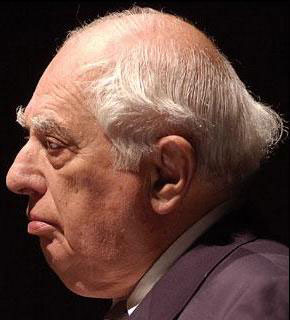

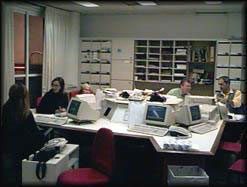
 Trucks-Panel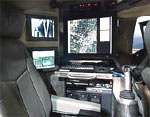
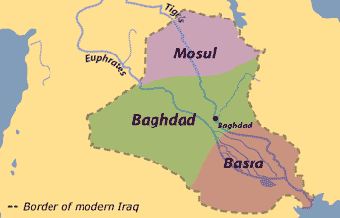
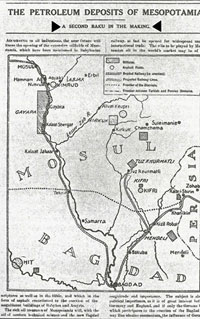
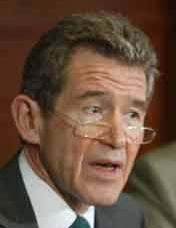 BrowneAliev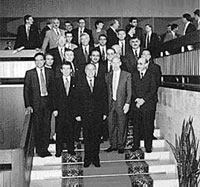
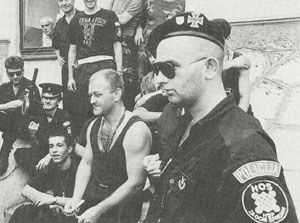
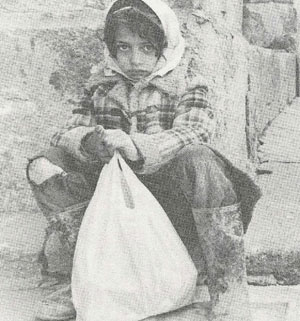
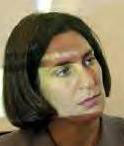
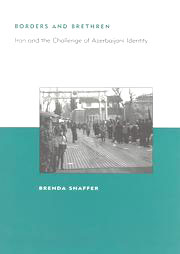
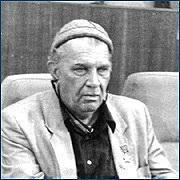

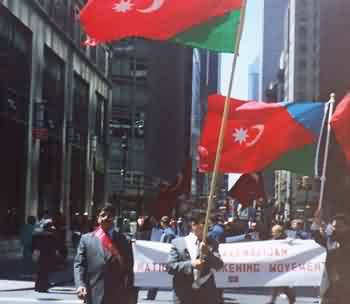
 Clooney]
 Norris
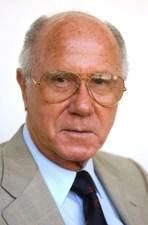
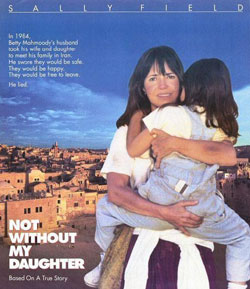

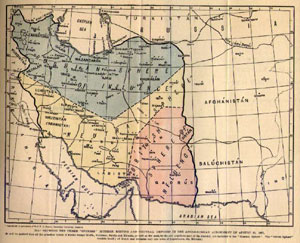
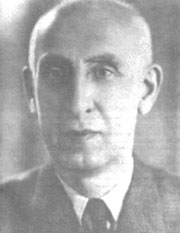
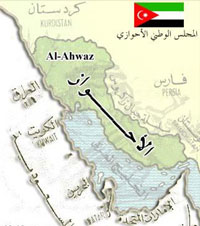
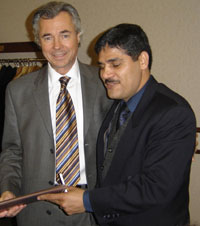
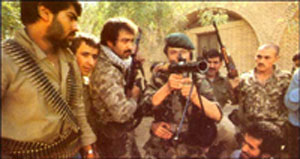
 IzadyBK